
Arrest Warrants in Mille Lacs County
A Mille Lacs County arrest warrant is a judge's order authorizing officers to take a named person into custody. Minnesota Rule 3 wants a complaint supported by probable cause, and it leans toward a summons unless the facts call for a warrant. The order moves the case forward and sets release conditions. The county listing shows warrant rows with no case link. For the charge, the judge, and the bail terms, you need the court file itself, and the two records answer different questions.
How a Mille Lacs County Arrest Warrant Starts
The county's own victim-process page lays out the sequence. A Mille Lacs County police agency investigates and hands its reports to the County Attorney, who weighs the reports against the law and files a criminal complaint. A District Court judge then reviews the complaint and its supporting material and chooses between a summons and an arrest warrant. The criminal-procedure rule governing that choice is published at revisor.mn.gov.
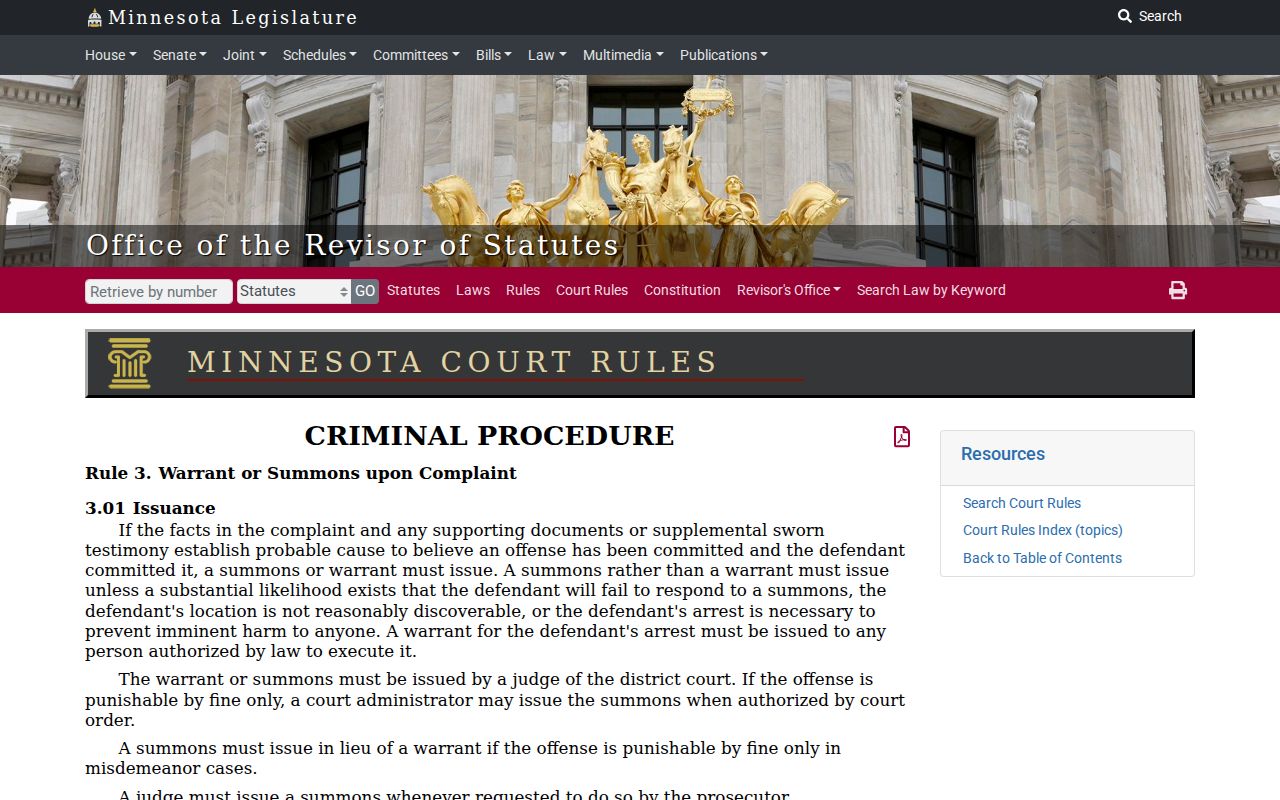
That rule fixes what a Mille Lacs County warrant must state and how fast an arrested person sees a judge.
What a Mille Lacs County Arrest Warrant Contains
The warrant travels with a small set of facts. Matching a listing row to a real Mille Lacs County warrant means checking these fields. Most of them live only in the court file.
| Warrant and Case Number | The court file identifier and the process identifier. Case Number |
|---|---|
| Issuing Court | Mille Lacs County District Court, Seventh Judicial District. |
| Subject Identity | A name or a description sufficient to identify the person, plus identifying details allowed in the public record. |
| Offense | The charge, its statute, and the level, along with the probable-cause basis in the complaint. |
| Bail and Conditions | The amount and type set by the judge, plus any release conditions. |
| Execution and Return | The serving agency, the service date, and the officer's certification back to the court. |
Who Serves Warrants in Mille Lacs County
Which officer serves which warrant is an operational assignment, and Mille Lacs County publishes no roster for it. The case decision stays with the court. These are the agencies the county identifies.
| Agency | Role in the County | Contact Route |
|---|---|---|
| Mille Lacs County Sheriff's Office | County law enforcement, warrant listing, and service questions | 320-983-8250 |
| Milaca Police Department | City police, inside the sheriff dispatch network | 320-983-6166 |
| Princeton Police Department | City police, inside the sheriff dispatch network | 763-389-4879 |
| Isle Police Department | City police, inside the sheriff dispatch network | 320-676-3641 |
| Onamia Police Department | City police, after-hours dispatch through the county | 320-532-3131 |
How Mille Lacs County Arrest Warrants Are Served
A law-authorized officer executes the warrant, tells the person what it is for, and takes them into custody. Minnesota Rule 3 sets execution and reporting rules statewide, including limits on nighttime service for some misdemeanor warrants. Afterward the officer certifies the execution and the case record is updated. Service does not end the case. Booking, first appearance, bail, and the next hearing all follow, and a different office holds each one.
Mille Lacs Warrant First Appearance and Bail
An arrested person must see a judge promptly, and the county jail page sets first appearance at 11:00 a.m. Monday through Friday except county holidays. Bail is set at that appearance, payable in cash or through a bail-bond agent; Mille Lacs County publishes no standard bond table. Fingerprinting at the jail costs $20 on a listed schedule, and that service is separate from any warrant check. For custody and bail questions, call the jail at 320-983-8244. The jail panel sits at millelacs.mn.gov, and it covers custody logistics, not the charge.
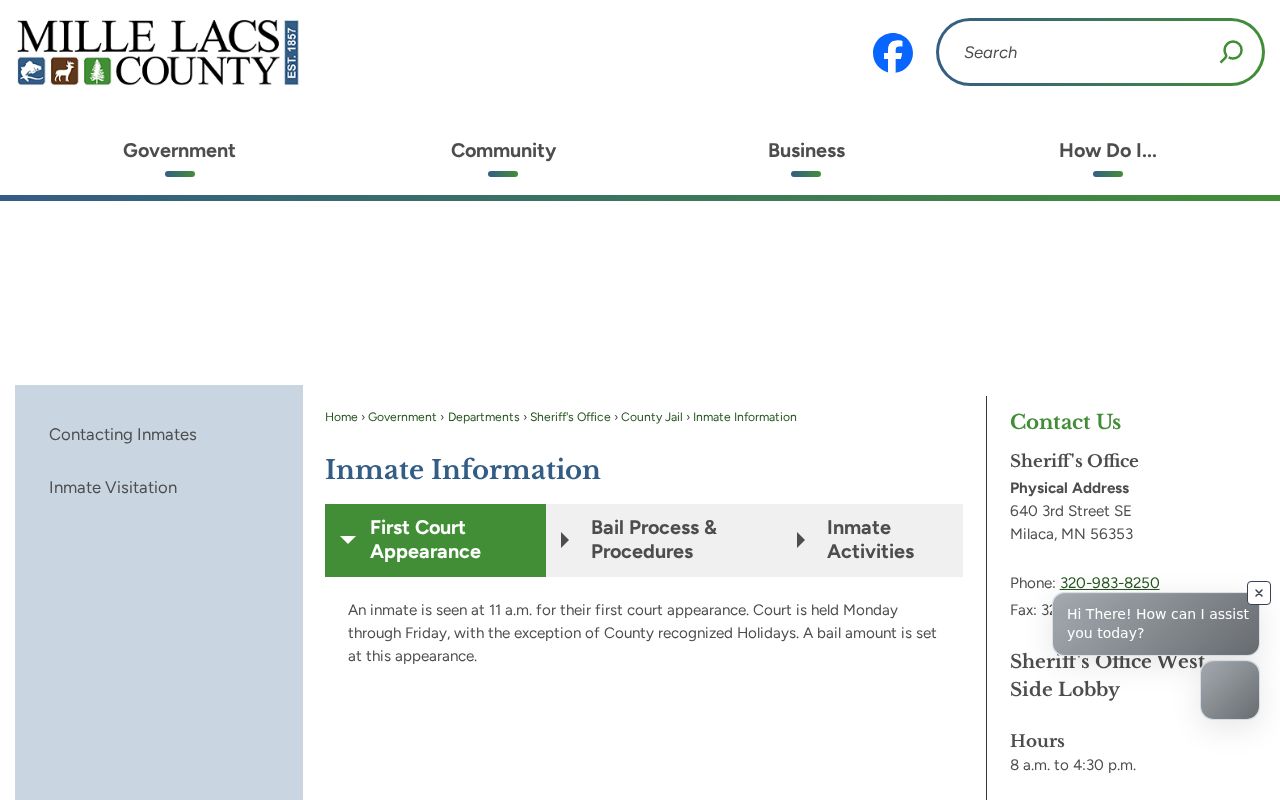
Use that jail page for custody logistics in Mille Lacs County. The court answers anything about the charge itself.
Arrest Warrant vs Summons vs Bench Warrant
Three documents can pull a person into a Mille Lacs County courtroom. Only one authorizes an immediate arrest.
| Point | Arrest Warrant | Summons | Bench Warrant |
|---|---|---|---|
| Trigger | Complaint and probable cause | Same complaint, lower risk | A missed court obligation |
| Custody | Yes, on service | No, appearance only | Yes, on service |
| Issuer | District court judge | District court judge | The judge in that case |
When Your Name Is Not on the Mille Lacs Warrant List
An empty search is not a clearance. A warrant can be new, sealed, held by a city or tribal court, or missing from a static export that lags. Some pending criminal cases return nothing in a court name search, and the system may withhold a party name by rule. When a name search stalls, search Minnesota Court Records Online by case or citation number instead. The reverse problem exists too. A row can carry a name much like yours with a different birth date. Confirm identity with a case number before acting on either result, because only the issuing court can settle the question.
What to Do If There's a Warrant for You
Move deliberately here, not fast. Confirm the case first. Then talk with a Minnesota defense attorney about a recall, a new hearing, a bond, or a surrender plan for the Mille Lacs County warrant. Court Administration can explain what the file requires, and the jail can walk through custody logistics if someone is already booked.
Important: Do not turn yourself in without advice and a confirmed destination. Driving or appearing with an active warrant can end in custody, and a missed appearance adds consequences.
Mille Lacs Warrants and Federal Warrants Are Separate
Federal and county warrant systems do not talk to each other. A federal charge filed in the District of Minnesota never shows on the Mille Lacs County listing, and a county case never appears in a federal docket. The District of Minnesota keeps courthouses in Minneapolis, St. Paul, Duluth, and Fergus Falls. No federal courthouse sits in Mille Lacs County.
| Federal Courts | District of Minnesota docket access runs through PACER and CM-ECF. |
|---|---|
| Enforcement | The U.S. Marshals Service and its North Star Fugitive Task Force handle federal fugitive work. |
| Fees | PACER charges per page with a document cap and a quarterly threshold. |
| Limits | A federal docket is not a public warrant search, and a sealed matter will not appear. |